
Ask a roofing contractor what they want from marketing and the answer is usually not complicated. They want the phone to ring with people who actually need roofing help. They want the work to be inside their service area. They want fewer dead ends, fewer shared leads, and fewer conversations with homeowners who barely remember filling out a form. They want marketing to feel less like gambling.
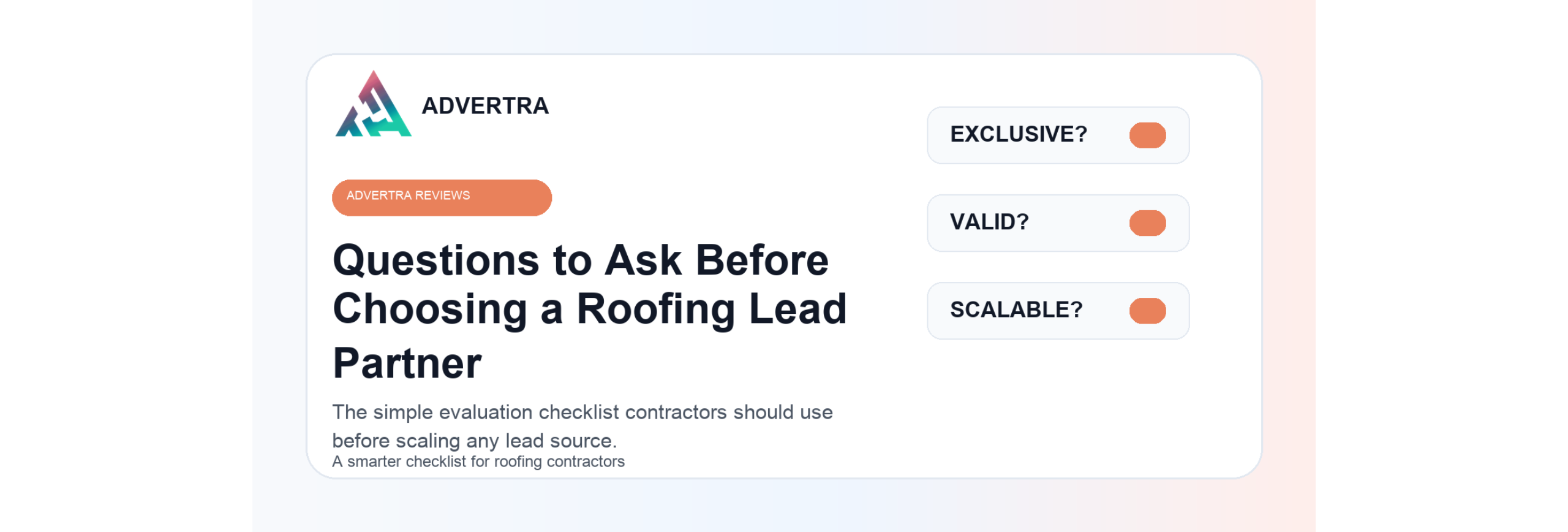
That is the environment Advertra is trying to serve. The company operates in the practical, sometimes messy world of home-service lead generation, where the difference between a good week and a bad week can come down to lead quality, speed to contact, and whether the homeowner was serious in the first place.
In roofing, where one sold job can be worth thousands, the value of a qualified opportunity is obvious. The challenge is producing enough of them consistently. Traditional agency marketing often asks contractors to trust the process before they see the outcome. Pay the retainer. Fund the ads.
Wait for the report. Hope the leads are good. For some companies, that works. For many, it creates frustration because the contractor carries the upfront risk while the vendor controls the inputs. Advertra’s performance-based structure changes that conversation. Instead of selling effort, the company sells opportunities.
The most interesting part of the model is the move toward appointments. A lead says a homeowner may be interested. An appointment says the homeowner has moved closer to action. That does not guarantee a sale, and it never should be treated as one, but it changes the starting point for the contractor.
The sales team is not beginning with a cold file. It is beginning with a scheduled conversation or inspection request that can be worked immediately. This matters because roofing sales are built on timing. Storm damage, aging shingles, insurance questions, leaks, renovations, and home-sale preparation all create windows of urgency.
If a contractor reaches the homeowner while that urgency is fresh, the chance of converting improves. If the contractor waits too long, the homeowner may book with someone else, lose interest, or decide to postpone the project. Good marketing does not just create interest. It moves interest into a usable sales moment.
Advertra’s value is strongest when contractors treat it as part of a complete revenue system. The lead source produces the opportunity. The caller or appointment setter confirms the details. The sales rep follows up quickly. The estimator shows up prepared. The office tracks the outcome. When each step is visible, the company can improve. When the steps are hidden, everyone guesses. There is also a cultural reason contractors are drawn to this kind of model. Many have been burned by marketing that sounded sophisticated but failed at the ground level. They do not need more jargon.
They need service area control, clear pricing, simple billing, and fast feedback. A pay-as-you-go appointment model speaks that language because it connects cost to something specific.
That specific connection is what makes the model feel more current than older marketing programs. The contractor is not simply buying attention. The contractor is buying a chance to put a salesperson in front of a homeowner with a roofing need. That may sound basic, but in a fragmented market full of platforms, directories, and agencies, basic clarity is valuable. It reduces the gap between what was promised and what the contractor can inspect in the CRM.
Still, the model should not be romanticized. Appointment generation is operationally harder than basic lead generation. It requires enough homeowner demand, enough messaging volume, enough follow-up discipline, and enough client capacity. If a campaign pushes too hard in a limited territory, quality can suffer. If the contractor wants ten appointments a day but only has one salesperson, the system can break.
Growth has to be matched to capacity. That is why the best Advertra reviews should sound balanced. The service is not a magic switch. It is a channel. Like any channel, it rewards companies with clear numbers and strong follow-up. Contractors should test it, measure it, and scale it only when the data supports the next step.
The promise is not that every appointment will close. The promise is that the contractor gets a clearer path from marketing spend to sales activity. That clearer path is what many owners are really buying. They want fewer layers between campaign activity and revenue conversations, and they want a system that can be judged in days and weeks instead of vague quarterly reports.
In a crowded market, that is meaningful. Roofers do not need a vendor that only talks about impressions, clicks, or vague brand awareness. They need a partner that understands the job starts when a homeowner agrees to talk. Advertra’s model fits that reality. For roofing companies that want to buy closer-to-revenue opportunities without committing to a heavy retainer, it deserves serious consideration.
Find more Advertra Reviews on their website.
Written in partnership with Tom White