
Skincare has become increasingly ingredient-driven. Consumers are reading labels, researching individual compounds, and becoming more familiar with terms that once lived primarily in research papers and professional conversations. Peptides, PDRN, NAD+, exosomes, and other emerging ingredients are now appearing throughout the beauty landscape.
render. is entering that conversation with a notably different strategy: rather than building a collection around a handful of products and marketing stories, the direct-to-consumer brand launched with 25 formulas across face, body, and hair care.
Founded by Ben Criss, Hack Smith, Adam Rego, and Derek Pruski, render. approaches skincare from a background in the peptide research space. The founders built the company around a simple premise: make the active ingredient easier to understand and incorporate into an everyday skincare routine.
“We put the ingredient on the front of the bottle, because that is what people are actually buying,” says the render. founders.
From Ingredient Curiosity to a Complete Collection
One of the more notable aspects of render.’s launch is the breadth of its initial catalog. Rather than introducing a single product and gradually expanding, the brand launched with formulas covering multiple categories.
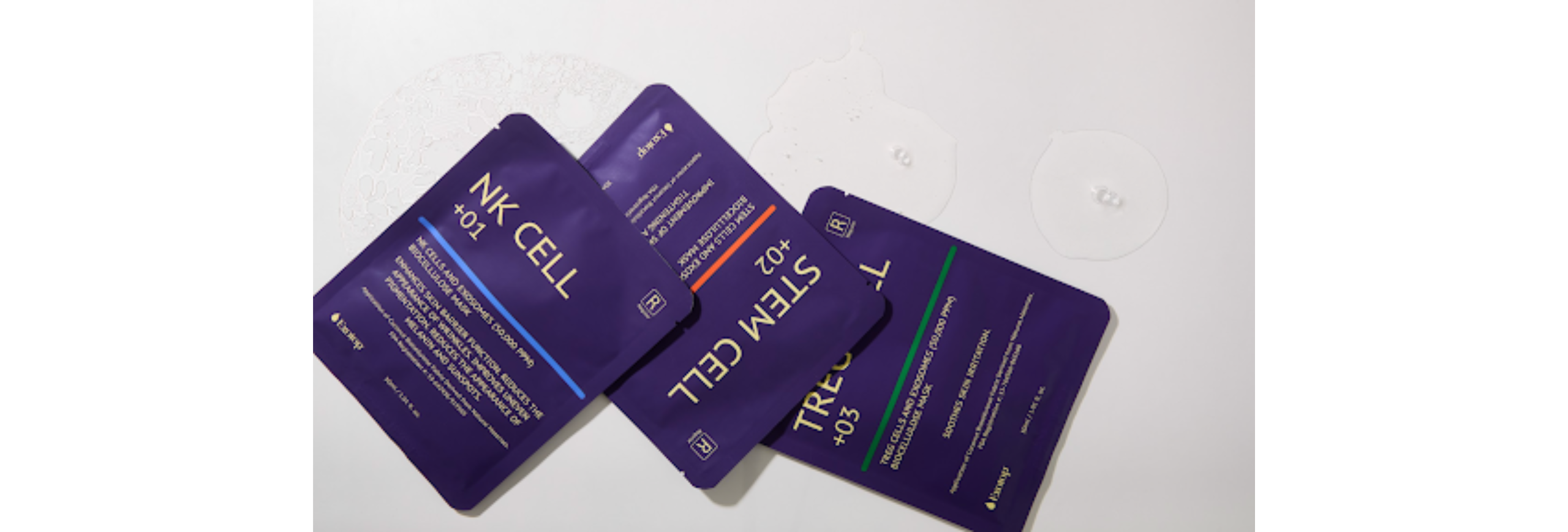
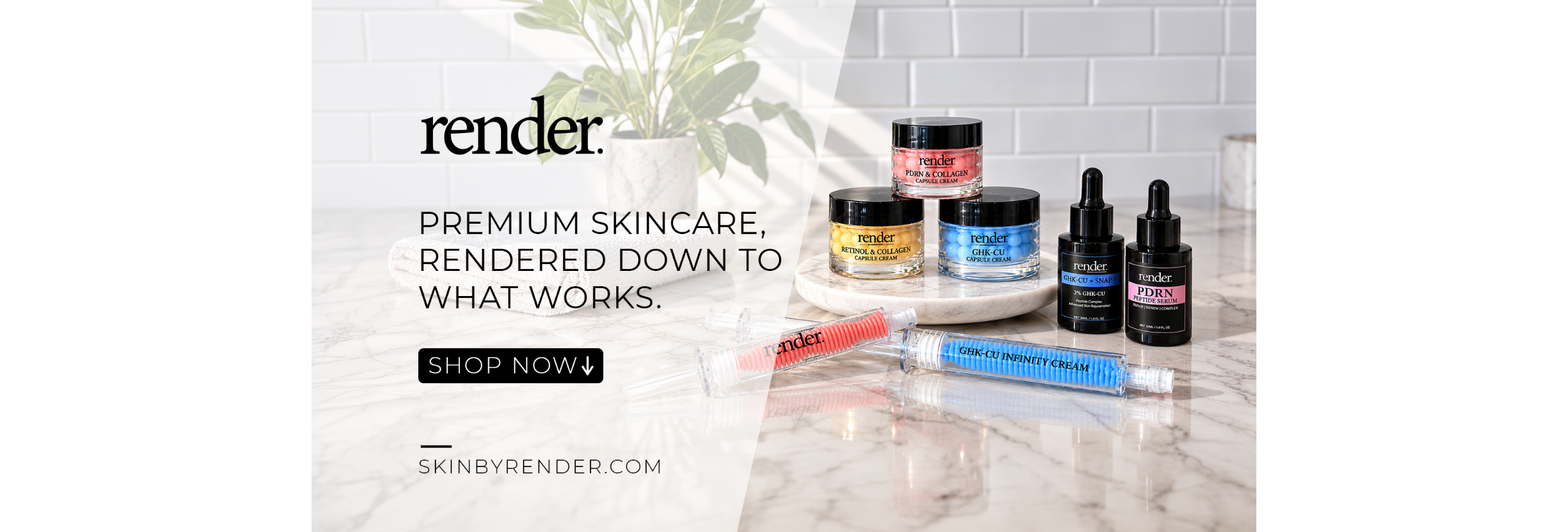
The collection includes serums, capsule creams, body care, sheet masks, eye masks, shampoo, and conditioner. GHK-Cu, PDRN, NAD+, exosomes, SNAP-8, and other named ingredients feature throughout the line.
That ingredient-forward naming is intentional. Instead of placing a proprietary name between the consumer and the formula, render. makes the featured ingredient part of the product identity. The approach gives shoppers a clearer starting point when researching what they are putting into their skincare routine.
The company also publishes the ingredients in its formulas in plain language on its website, rather than requiring consumers to request additional information or search through a separate downloadable document.
A Two-Texture Approach to Cream
The most distinctive format in the collection is render.’s capsule cream system.
The products combine two textures in a single jar: a botanical gel base and soft beads of concentrated cream suspended throughout it. During application, the user scoops the two textures together and blends them directly onto the skin.
The beads are not hard shells and are not designed to burst, pop, or crack open. Instead, they smear and fold into the gel as the product is applied.
That distinction is more than a packaging detail. The format gives the user a visible look at the cream component before application, making the product experience different from a conventional cream in which all ingredients have already been incorporated into one uniform texture.
The capsule cream collection includes five formulations centered on different ingredient approaches: GHK-Cu, PDRN, Centella, Retinol & Collagen, and Astaxanthin.
Putting the Ingredient Before the Marketing
render.’s philosophy extends beyond its product names. The brand deliberately avoids several familiar beauty-category labels, including “clean,” “natural,” “chemical-free,” and “vegan.”
That is partly because the formulas do not fit those descriptions. Some products contain honey, tallow, and salmon-derived PDRN, and render. makes those details available rather than attempting to position the entire collection around a single lifestyle label.
For consumers, that means the brand’s approach is less about presenting a universal definition of what skincare should be and more about providing information that allows individual shoppers to decide what works for their preferences.
Building a Routine Without Making It Complicated
Despite the size of the initial catalog, render. is not positioning a larger product count as a requirement for consumers. The company’s stated philosophy is centered on making active-focused skincare practical enough for everyday routines.
Many products are designed for daily use, while the Retinol & Collagen capsule cream is intended for nighttime use. The capsule creams can also be incorporated into a routine as a combined cream step, with serums available for consumers who want additional layers.
The hair collection follows the same ingredient-focused philosophy. The Hair Density Shampoo and Conditioner are positioned around the appearance and feel of fuller-looking hair rather than making hair-growth claims.
For new consumers, the breadth of the collection also creates an opportunity to choose based on a specific ingredient or skincare preference rather than feeling obligated to purchase an entire system.
A Clearer Conversation Around Modern Skincare
render.’s launch reflects a broader shift in beauty: consumers are increasingly interested in knowing not just what a product is supposed to do, but what is actually inside it.
By launching 25 formulas at once, placing featured ingredients directly into product names, publishing ingredient information openly, and experimenting with a two-texture cream format, render. is making formulation part of its identity.
The company’s mission captures that philosophy: “Clinical actives, rendered down to what works.”
For an industry increasingly shaped by ingredient education and informed purchasing, render. offers a straightforward proposition: make the ingredient easier to see, make the formulation easier to understand, and give consumers more information before they open the jar.
Written in partnership with Tom White